
The short answer
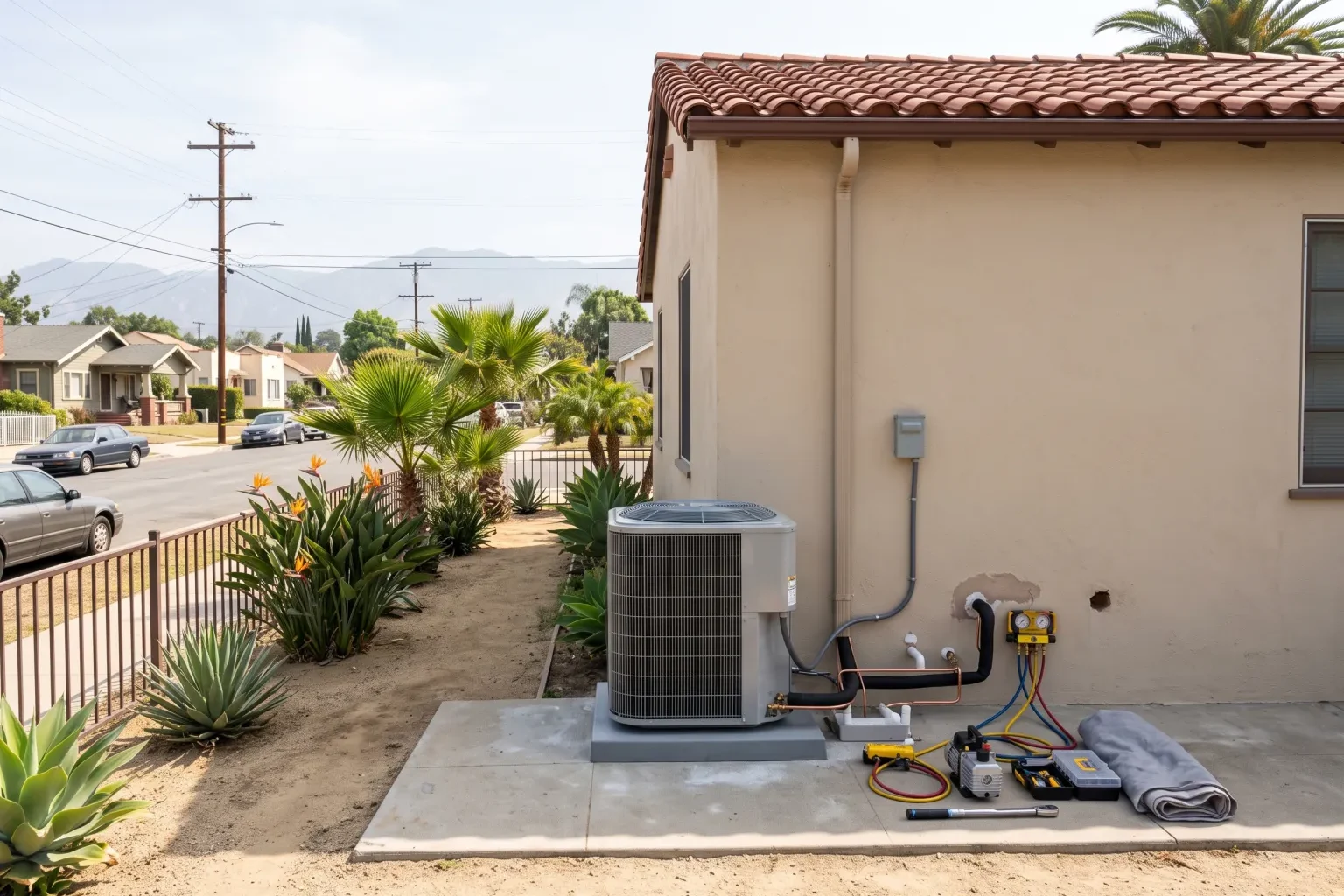
Climvanta HVAC Repair Service installs central air conditioners and heat pumps in Tarzana and nearby cities after a load calculation, a duct inspection and a review of rebate eligibility. You get clear equipment options and a written scope before any work begins.
Putting in a new cooling system is one of the larger decisions a homeowner makes about a house, and in the hot southern Valley it is also one of the most consequential. A unit sized and installed well can carry a Tarzana home through a hundred-degree afternoon without strain. One that is oversized, undersized or attached to leaky ductwork will run loud, cool unevenly and wear out early. Climvanta HVAC Repair Service plans each installation around the house in front of us, the ducts it already has and the way your family actually uses it.
When a new system starts to make sense
Very few people replace an air conditioner on a whim. Usually something pushes the question forward. These are the situations we see most often in the Valley:
- A major component such as the compressor or evaporator coil has failed on an older unit
- The existing system relies on R-22 refrigerant, which is no longer manufactured for service
- Repairs have become a yearly event and the bills keep stacking up
- The house has been remodeled or expanded, and the original equipment no longer keeps up
- Certain rooms never get comfortable no matter how low the thermostat goes
- The home has never had central air and relies on window units or fans
- You want to move from a gas furnace and separate AC to a single electric heat pump
Sizing, ducts and electrical: what we evaluate first
Bigger is not better with air conditioning. An oversized unit cools the air quickly, shuts off before it removes enough moisture, and cycles constantly, which shortens its life. An undersized one runs nonstop on the hottest days and still falls behind. To avoid both, we perform a load calculation that accounts for square footage, insulation, window area and orientation, ceiling height and how much afternoon sun hits the house. A west-facing stucco home in Tarzana with large windows has a very different load than a shaded condo in Westlake Village of the same size.
Ductwork comes next. Many older Valley homes still have their original duct system snaking through a hot attic, and over the years joints separate, flex duct gets crushed by storage or foot traffic, and insulation degrades. Pairing a new high-efficiency unit with ducts that leak a significant share of their air into the attic wastes much of the upgrade. We inspect accessible runs, check supply and return sizing against the new equipment, and tell you if repairs, sealing or partial replacement should be part of the job.
We also look at the electrical panel and the circuit feeding the outdoor unit, the location and condition of the condenser pad, the condensate drain route, and the thermostat. Each of these can affect the scope.
Choosing between equipment paths
Not every installation means a full system swap. Depending on what we find, a few approaches tend to come up.
The first is a matched replacement of the outdoor condenser and indoor coil, keeping a furnace that still has good years left. This works when the furnace is in solid condition and compatible with the new coil. The second is a complete system replacement, which makes sense when the furnace and AC are both near the end and the ducts can be addressed at the same time. The third is switching to a heat pump, which cools in summer and heats in winter with one outdoor unit. For homes with no ductwork, or for an addition or converted garage, a ductless mini-split may be the cleanest answer.
Local rules factor into these choices. South Coast AQMD Rule 1111 limits NOx emissions from gas furnaces installed in the region and is being amended toward zero-emission requirements, so anyone replacing a furnace alongside the AC should check the current compliance dates. On the incentive side, LADWP residential electric customers, which includes Tarzana, can apply for rebates on qualifying heat pump systems after installation, within 12 months of purchase, with amounts tied to SEER2 and HSPF2 ratings. Cities outside Los Angeles may be on Southern California Edison, so we confirm the current offer for your address. The federal 25C credit no longer applies to heat pumps placed in service after 2025.
Factors that move the installation price
Every quote we write is specific to the house, and these are the variables that make the biggest difference from one job to the next.
- Capacity and efficiency rating of the equipment you choose
- Whether you are replacing the outdoor unit only, the full split system or converting to a heat pump
- How much duct repair, sealing or replacement the home needs
- Electrical upgrades, such as a new circuit or panel work
- Attic access, roof pitch and the distance between indoor and outdoor units
- Permit requirements in your city
- Add-ons like a new thermostat, upgraded filtration or a condensate pump
From first visit to first cool night
It starts with an in-home assessment. We measure, look at the existing equipment, check the attic and ducts, and ask about comfort complaints, rooms that run warm and any plans for future remodeling. From that visit you receive a written proposal with one or more equipment options and the full scope of work for each.
Once you choose, we schedule the installation and handle permits where required. On install day the crew protects floors and work areas, removes the old equipment, sets the new indoor coil or air handler and outdoor unit, runs or replaces refrigerant lines as needed, and makes the electrical and drain connections. The refrigerant circuit is pressure tested and evacuated before charging.
Before we leave, we start the system, verify temperatures and airflow, set up the thermostat and show you how to change the filter. If a city inspection is part of the permit, we coordinate that step too. Rebate paperwork for qualifying heat pumps is filed after installation, and we can point you to the details you will need for the application.
AC Installation by city
- AC Installation in Hidden Hills
- AC Installation in Calabasas
- AC Installation in San Fernando
- AC Installation in Beverly Hills
- AC Installation in West Hollywood
- AC Installation in Santa Monica
- AC Installation in Agoura Hills
- AC Installation in Simi Valley
- AC Installation in Burbank
- AC Installation in Los Angeles
- AC Installation in Culver City
- AC Installation in Westlake Village