
The short answer
A new AC system in Los Angeles should be sized from a room-by-room load calculation, matched to ducts that are sealed and sized correctly, and placed where the outdoor unit can breathe. We look at the house, the electrical panel and the attic before suggesting equipment, and we also explain when a heat pump makes more sense than a cooling-only unit.
Putting central air into a Los Angeles house is rarely a simple swap. Plenty of homes across ZIP codes like 90004, 90006 and 90011 were built long before anyone expected air conditioning, so the job often starts with questions about attic space, duct routes, electrical capacity and where a condenser can sit on a narrow side yard. Climvanta HVAC Repair Service drives about 14 miles southeast from our Tarzana base to plan and install cooling systems for houses, duplexes and condos throughout the city. Our approach is to measure first, explain the options in plain terms, and only then recommend equipment that fits the way your home actually holds and loses heat.
What we check before choosing equipment
Guessing tonnage from square footage is how homeowners end up with a unit that short-cycles, leaves rooms clammy, or never catches up on a hot afternoon. In older central-city homes, the numbers change a lot depending on window orientation, whether the attic has any real insulation, and whether a second-story addition was built on top of a 1920s bungalow footprint.
During the site visit we gather the information a proper load calculation needs, then talk through what it tells us.
- Wall and ceiling insulation levels, plus window size and the direction each room faces
- Existing ductwork: material, condition, leakage at joints, and whether supply and return sizes make sense
- Electrical panel capacity and whether a dedicated circuit for the condenser is available
- Clearance around the planned outdoor unit location, including setbacks from property lines and neighbors' windows
- Attic access and headroom for an air handler or furnace coil
Homes with no ducts, old ducts, or tight attics
Many Los Angeles houses heat with a wall furnace or floor furnace and have never had a duct system. In that situation we compare two paths. One is adding new insulated ducts through the attic to a central air handler. The other is a ductless mini-split setup with individual indoor heads in the rooms that need cooling most. Ductless systems avoid cutting new ceiling openings and work well in hillside homes or condos where attic space is limited.
Where ducts already exist, we inspect them closely. Flexible duct in a hot attic sags, kinks and pulls apart at the collars over time, and older metal runs are often leaking at every seam. Pairing a new high-efficiency condenser with leaky ductwork wastes much of what you paid for, so we will tell you honestly if repair, sealing or replacement belongs in the plan.
Cooling for the way the city's weather actually behaves
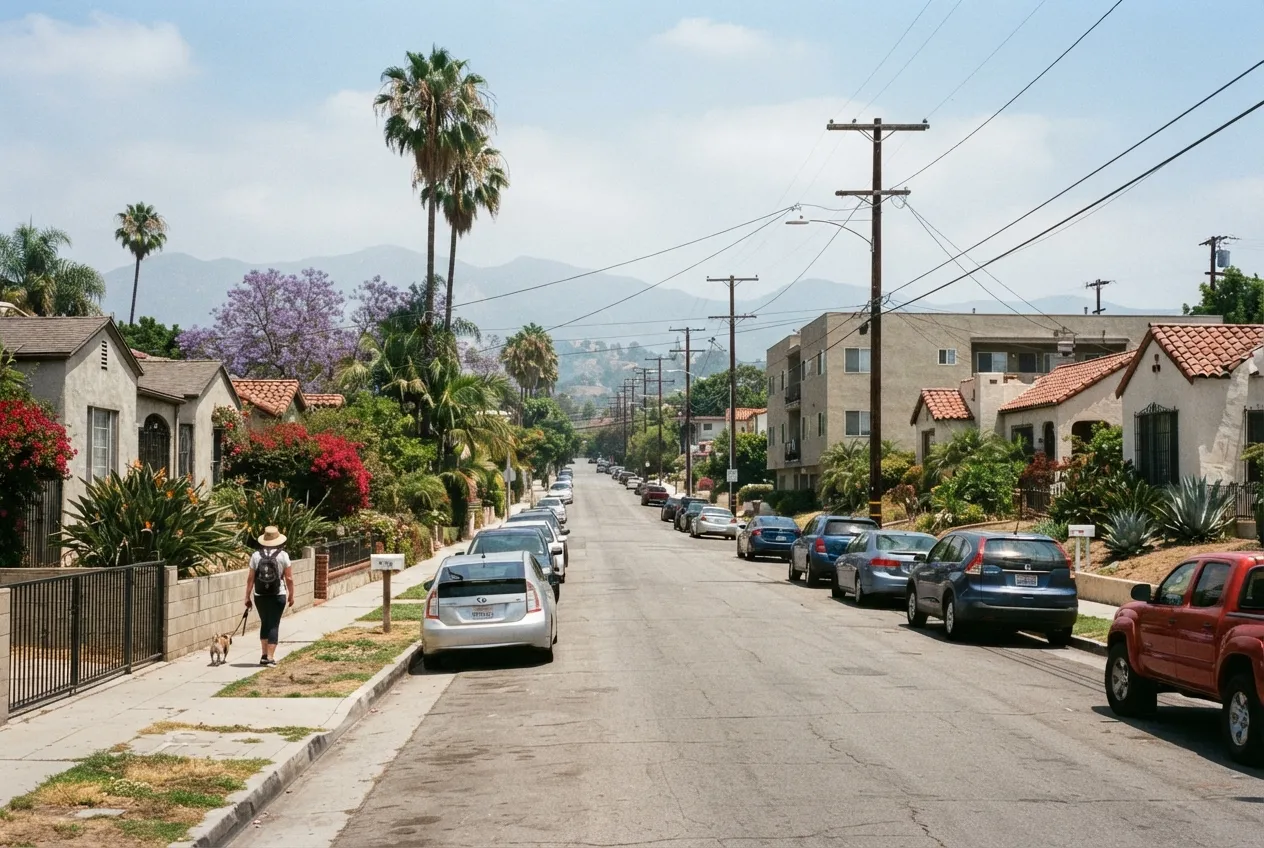
Los Angeles has a Mediterranean climate with dry summers and mild winters, but the city spreads across very different microclimates. Neighborhoods closer to downtown and farther inland heat up much more than areas near the ocean, and fall Santa Ana winds can push temperatures up long after summer seems finished. A system for a south-facing stucco home in 90003 should not be sized like one for a shaded house near the coast.
We also think about indoor air during wildfire smoke events. A new installation is a good moment to add a filter rack that accepts a higher-grade pleated filter, or a media cabinet, so the system can keep fine particles down when you need to keep windows shut for days.
Cooling-only AC or a heat pump?
Because winters here are mild, a heat pump can handle both summer cooling and winter heating in many Los Angeles homes, replacing the need for a separate gas furnace. That matters if your existing furnace is near the end of its life. South Coast AQMD Rule 1111 limits NOx emissions from natural-gas fan-type central furnaces sold and installed in the region, and the district has been amending it toward zero-emission requirements, so anyone planning a furnace replacement should check the current rule.
Rebates depend on the utility serving your address. LADWP residential customers can apply for Consumer Rebate Program rebates on qualifying heat pump HVAC systems, filed after installation and within 12 months of purchase. The federal 25C credit for heat pumps no longer applies to systems installed after December 31, 2025. We confirm the current offer before including it in any quote.
How installation day usually goes
Most replacements on existing ductwork take a day, while new duct systems or ductless setups with several indoor heads can take longer. We protect floors along the work path, recover refrigerant from the old system, set the new condenser on a level pad, and connect the line set, wiring and condensate drain. Before we leave, we run the system, measure airflow and temperature split, and walk you through the thermostat and filter location so nothing is a mystery later.
More services in Los Angeles
- AC Repair in Los Angeles
- Heating Repair in Los Angeles
- Heat Pump Installation in Los Angeles
- Furnace Repair in Los Angeles