
The short answer
A heat pump is a strong replacement option in Tarzana because it cools through hot Valley summers and heats efficiently through mild winters. We size it to your home, check ducts and electrical capacity, and confirm which LADWP or SCE rebates apply to your address.
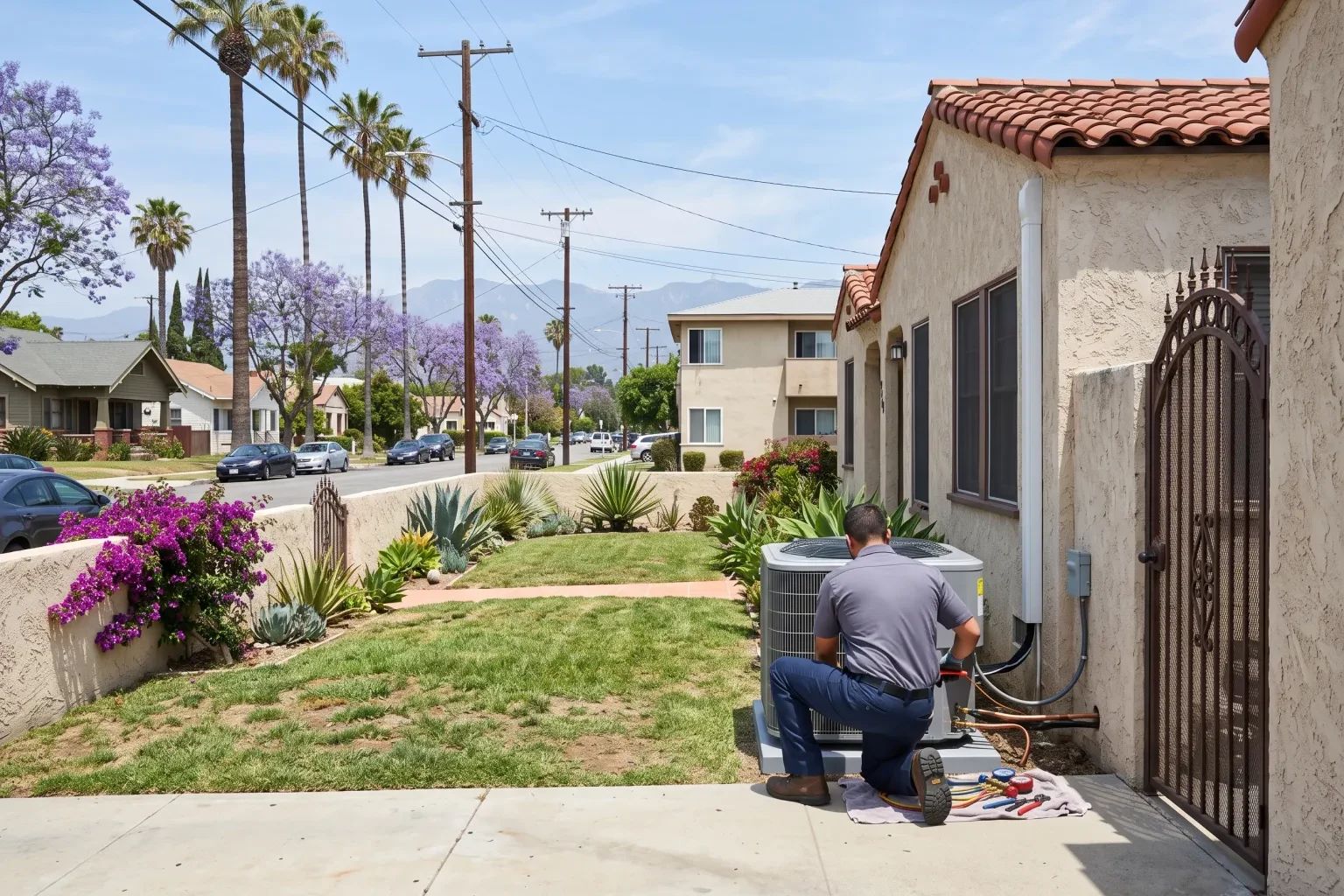
A heat pump moves heat instead of burning fuel to make it. In summer it pulls warmth out of the house and dumps it outside, just like a central air conditioner. In winter it runs the same cycle in reverse, gathering heat from outdoor air and bringing it in. For Tarzana, with long hot summers and short, mild winters, that one piece of equipment can replace both an aging AC condenser and a gas furnace. Climvanta HVAC Repair Service designs and installs ducted heat pump systems, plus ductless options for homes without usable ductwork, across Tarzana and the surrounding West Valley and hillside communities. Here we explain the situations that lead homeowners to consider one, the survey we do first, how a heat pump compares with repairing your current setup, the variables that shape the price, the rebate picture, and how the installation itself is carried out.
Reasons homeowners start looking at a heat pump
Few people wake up wanting a heat pump. The decision usually starts with a problem elsewhere in the system, or with a plan to simplify how the house is heated and cooled. Typical starting points include:
- The air conditioner is old, uses a phased-out refrigerant, or needs a costly compressor repair
- The gas furnace has a cracked heat exchanger or keeps needing parts
- You want to stop relying on gas for heating, or are adding solar and want to use more of that electricity
- A furnace replacement is coming up and the regional emissions rules for gas furnaces are tightening
- Electric resistance heaters or wall units are expensive to run on cooler nights
- Certain rooms are always too warm in August and too cool in January
The survey behind a good installation
Heat pumps reward careful design. Because they deliver air at gentler temperatures than a gas furnace, ducts that were barely adequate for a furnace can leave rooms feeling cool on a winter evening. And because the same unit carries the summer cooling load, it has to keep up on the hottest Valley afternoons, often during a Santa Ana stretch when outdoor temperatures climb well above normal.
So the first visit focuses on measurement. A technician estimates heating and cooling loads room by room, looks at window exposure and attic insulation, and inspects the existing duct system for leaks, crushed runs and undersized returns. We check the electrical panel for available capacity, confirm there is a suitable outdoor spot with good airflow and clearance from bedroom windows, and note where the indoor air handler will sit, whether that is the attic, a closet or the garage. If ducts are in poor shape or missing, we talk through ductless or hybrid layouts.
Keeping your current equipment versus switching
If your furnace and air conditioner are both relatively young and working well, there is rarely a reason to tear them out just to install a heat pump. A repair or tune-up is the sensible move, and we will say so.
The math shifts when one or both pieces are near the end. Replacing an old AC condenser with a heat pump costs roughly the same kind of effort as replacing it with another air conditioner, and you gain electric heat in the process. Some households keep the existing gas furnace as backup in a dual-fuel arrangement, letting the heat pump carry most of the year. Others remove the furnace entirely and install an electric air handler. We explain both approaches, including how each fits with South Coast AQMD Rule 1111, which limits NOx emissions from gas furnaces sold and installed in the region and is being amended toward zero-emission requirements.
Variables that affect project cost
Every heat pump quote comes from the survey. The biggest variables are:
- System capacity and efficiency ratings, which also determine rebate amounts
- Single-stage, two-stage or variable-speed compressor design
- Whether the existing air handler can be reused or a new one is required
- Duct sealing, resizing or new runs to deliver enough airflow
- Electrical work, including a new circuit, disconnect or panel upgrade
- Removal of a gas furnace and capping of the gas line, if you are going all-electric
- Thermostat upgrades and equipment pads or wall brackets
Rebates and incentives we can confirm
LADWP residential electric customers can apply for Consumer Rebate Program rebates on qualifying heat pump HVAC systems, with the amount based on the unit's SEER2 and HSPF2 ratings. The application is filed after the equipment is purchased and installed, within 12 months of purchase. Many homes outside the City of Los Angeles are served by Southern California Edison instead, so what is available depends on your utility, and we confirm the current offer before putting it in a quote.
The federal 25C Energy Efficient Home Improvement Credit applied to qualifying heat pumps placed in service before December 31, 2025, and it is not available for new installations after that date.
Installation steps
On install day, the crew protects floors, removes the old condenser and any equipment being retired, and sets the new outdoor unit on a level pad. Inside, we connect or replace the air handler, run or reuse the refrigerant line set after confirming it is clean and properly sized, and complete the wiring and thermostat setup. The refrigerant circuit is pressure tested and evacuated before charging.
At start-up, we run the system in both cooling and heating modes, measure airflow and temperatures at supply and return, and check that defrost and auxiliary heat controls behave correctly. Then we explain the thermostat settings, including why steady settings usually serve a heat pump better than big swings, and show you how to keep the outdoor unit clear of leaves and debris.
Heat Pump Installation by city
- Heat Pump Installation in Hidden Hills
- Heat Pump Installation in Calabasas
- Heat Pump Installation in San Fernando
- Heat Pump Installation in Beverly Hills
- Heat Pump Installation in West Hollywood
- Heat Pump Installation in Santa Monica
- Heat Pump Installation in Agoura Hills
- Heat Pump Installation in Simi Valley
- Heat Pump Installation in Burbank
- Heat Pump Installation in Los Angeles
- Heat Pump Installation in Culver City
- Heat Pump Installation in Westlake Village