
The short answer
A ductless mini-split is a good fit when one or more rooms stay uncomfortable, the house has no usable ducts, or an addition was never tied into the central system. We size each indoor head to the room, plan the line set route, and confirm which rebates your utility offers before you decide.
A ductless mini-split puts heating and cooling right into the room that needs it, with no attic ductwork in between. For many Tarzana households that is the cleanest answer to a converted garage that never cools down, a second-story bedroom that bakes every August, or an older house where adding ducts would mean opening ceilings. Climvanta HVAC Repair Service plans and installs these systems for homes in Tarzana and the surrounding communities, from single-room units to multi-zone setups that serve most of a house. This page walks through when a mini-split is worth considering, what our technicians look at before anything is ordered, how it compares with fixing what you already have, which factors move the cost up or down, and what installation day actually looks like.
Rooms and houses that tend to need a ductless system
Valley summers are hard on any space that sits far from the air handler or under a hot roof. In Tarzana, where afternoons run much hotter than they do near the coast, the problem rooms are usually easy to name. Homeowners often describe the same pattern: the thermostat hallway feels fine while one wing of the house stays several degrees warmer and nobody wants to sleep there.
These are the situations where we most often suggest looking at ductless equipment rather than stretching the central system further:
- A garage, bonus room or backyard studio that was converted without any heating or cooling
- An upstairs bedroom that stays warm long after sunset because the attic above it holds heat
- A home with wall heaters or a floor furnace and no duct system at all
- An addition whose supply run is so long that barely any air reaches the register
- Households that want separate temperatures for a home office, a nursery or an older relative's room
- Window units that are noisy, block light and have started to fail one after another
What our technicians evaluate before recommending equipment
A mini-split only performs well when each indoor head matches the load of its room and the outdoor unit has a sensible place to sit. Guessing at sizes leads to short cycling, uneven humidity and fan noise that people regret. So the first visit is a survey, not a sales pitch.
During that survey we measure and note the details that drive the design:
- Square footage, ceiling height, window area and which direction the glass faces
- Insulation in the walls and attic, and how much afternoon sun the roof takes
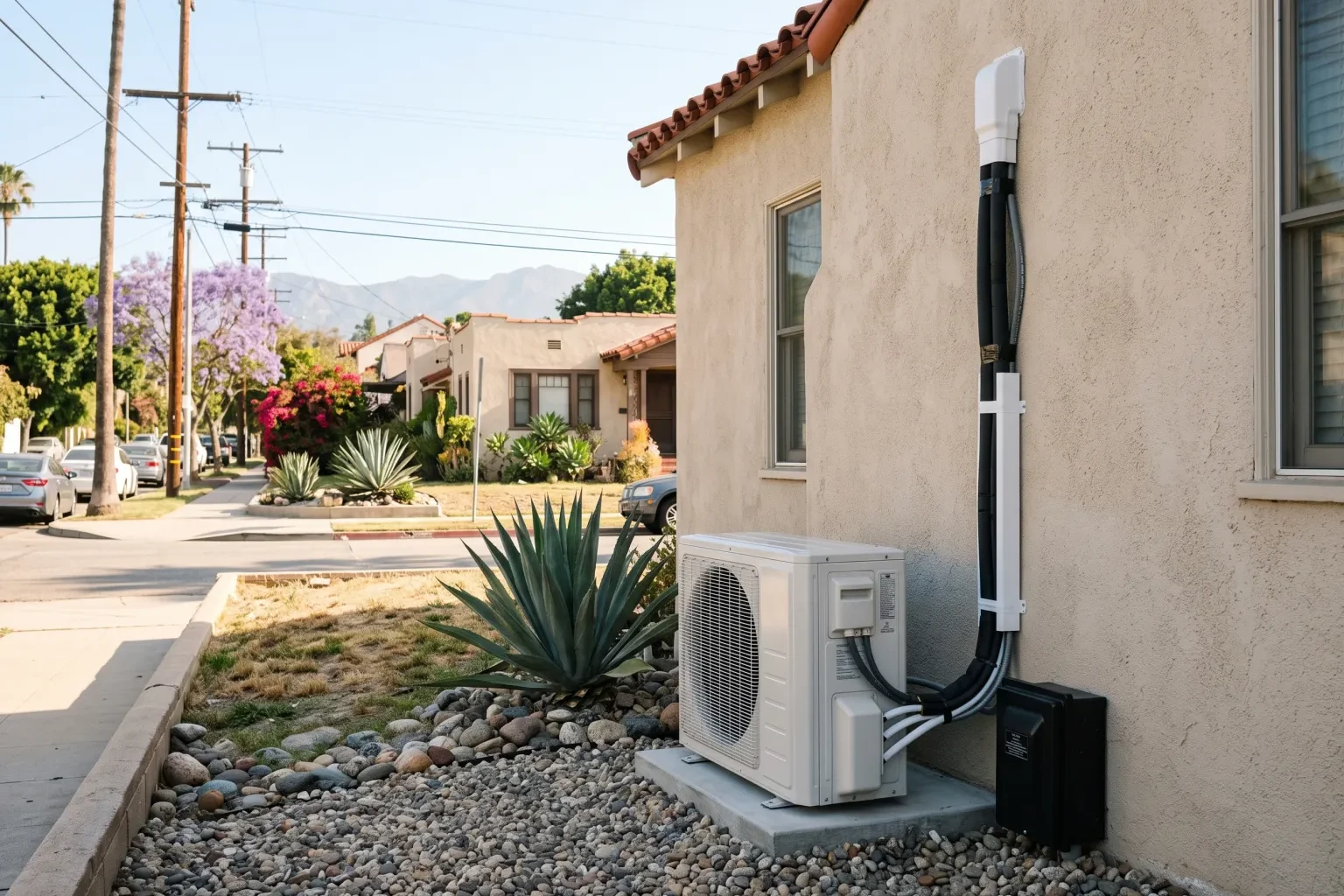
- Where the outdoor condenser can go with good airflow, clearance and a short line set run
- The wall or ceiling location for each indoor head, so air reaches the whole room without blowing straight at a bed or desk
- How condensate will drain, by gravity or with a small pump
- Electrical panel capacity and whether a dedicated circuit is needed
Fix the central system, extend it, or go ductless?
Not every hot room calls for new equipment. Sometimes the real culprit is a crushed flex duct in the attic, a disconnected boot, a dirty blower wheel or a central unit that has lost refrigerant. If we find that kind of problem, we will tell you, because a straightforward repair can bring a room back into range for far less disruption than an installation.
When the central system is sound but simply cannot reach a space, the choice is usually between adding a duct run and adding a ductless head. Ducts make sense when the attic path is short and the existing unit has spare capacity. Ductless is usually the stronger option when the route would pass through finished ceilings, when the existing furnace or air conditioner is already working at its limit, or when the household wants that room controlled on its own schedule.
For homes with no ducts at all, a multi-zone mini-split can replace wall heaters and window units with one outdoor unit feeding several rooms. Because a mini-split is a heat pump, it also handles mild Los Angeles winters, which lets many owners retire an aging gas wall heater at the same time.
What shapes the cost of a mini-split project
Every ductless job is priced from the survey, because two projects that look similar on paper can differ a lot once you see the house. These are the factors that matter most:
- How many indoor heads are involved and whether they share one outdoor unit or need separate ones
- Head style: wall-mounted, ceiling cassette, floor console or a concealed ducted air handler
- Efficiency ratings of the equipment, which also affect rebate eligibility
- Line set length and how hard the route is, including stucco penetrations and second-story runs
- Electrical work such as a new breaker, disconnect or panel upgrade
- Pads, wall brackets, line covers and condensate pumps
Rebates, utilities and the federal credit
LADWP residential electric customers can apply for Consumer Rebate Program rebates on qualifying heat pump HVAC systems, and the amount depends on the unit's SEER2 and HSPF2 ratings. The application goes in after the equipment is bought and installed, within 12 months of purchase. Many addresses around Tarzana's edges and in neighboring cities are served by Southern California Edison instead, and the available offers depend on which utility serves your home, so we confirm the current program before including it in a quote.
The federal Energy Efficient Home Improvement Credit covered qualifying heat pumps placed in service before December 31, 2025. It does not apply to new installations after that date, so we do not factor it into current projects.
How installation day goes
Once you approve the layout, we schedule a day that works for the household. The crew arrives, protects floors and furniture near each work area, and confirms the head locations with you before drilling. The outdoor unit goes on its pad or wall bracket, the line set is run and sealed through the exterior wall, and the electrical connection is completed.
Before anyone starts the system, the refrigerant lines are pressure tested and evacuated with a vacuum pump, a step that protects the compressor for years to come. Then we run each zone in cooling and heating, check temperatures at the head, confirm the condensate drains properly and walk you through the remote or app. Before we leave, you will know how to clean the washable filters and how often the coils should be looked at.