
The short answer
Better indoor air in Tarzana usually starts with the right filter, sealed ducts and a clean system, then adds air cleaners, ventilation or humidity control where needed. We inspect the HVAC system and ductwork first so you only pay for changes that address the actual source.
The air inside a house is shaped by everything the HVAC system pulls through it. In Tarzana that can mean fine dust carried on dry Santa Ana winds, smoke from wildfires in the hills, pollen in spring, and the stale, stuffy air that builds up when windows stay shut through a long hot summer. Leaky ducts in a hot attic can add their own contribution, drawing in insulation fibers and attic dust and spreading them through the rooms. Climvanta HVAC Repair Service helps homeowners in Tarzana and nearby cities improve what they breathe indoors, using filtration, duct repair, ventilation and humidity control tied into the heating and cooling system. This page describes the signs of an air quality problem, what we inspect, how to choose between fixing existing equipment and adding new components, the factors that influence cost, and how a visit is handled.
Warning signs inside the house
Air quality problems rarely announce themselves directly. Instead they show up as small annoyances that people get used to. Pay attention if your household notices:
- Dust settling on shelves and screens again a day or two after cleaning
- Allergy or sinus symptoms that ease when you leave the house
- A smoky smell indoors that lingers long after a wildfire smoke event outside has cleared
- Musty odors when the air conditioner starts
- Air that feels very dry in winter, with static shocks or dry skin
- Dark streaks around supply registers or on the ceiling near vents
- Rooms that feel stuffy no matter how often the system runs
Where we look for the source
Adding a gadget without finding the cause tends to disappoint. Our inspection traces the air path from the return grille to the supply registers, looking for the places where contaminants enter or build up.
We start with the filter: its size, rating and fit, and whether air is bypassing it through gaps in the rack. Next comes the blower compartment and evaporator coil, where dust and moisture can combine into growth that releases odors. In the attic, we check duct connections, return plenums and boots, since a leak on the return side can pull attic dust straight into the system. We also check the condensate drain and pan for standing water, look at how much fresh air the house gets, and talk with you about specific concerns such as pets, allergies, smoke sensitivity or recent remodeling dust.
The result is a short list of findings ranked by how much each one affects the air you breathe.
Repairing what you have versus adding equipment
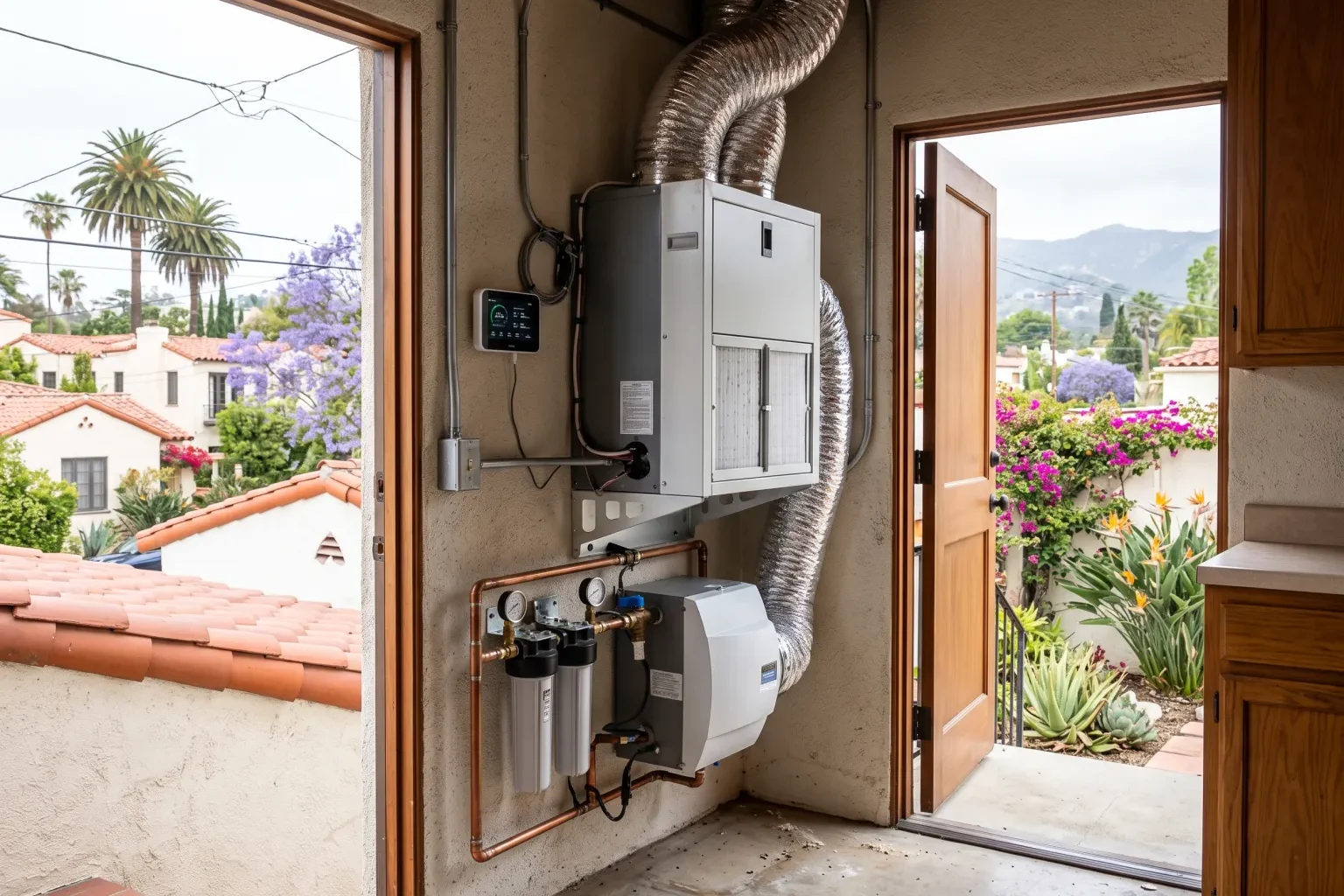
Many improvements cost little and come first. A properly fitted, higher-rated filter, a sealed filter rack, cleaned coils and blower, and repaired return ducts can change indoor air noticeably on their own. If your system can handle a thicker media filter cabinet, that upgrade is often the next step, because it captures more fine particles, which matters during smoke season, without choking airflow.
When those basics are in place and problems remain, we discuss additional equipment. Options can include whole-house air cleaners mounted at the air handler, ventilation equipment that brings in filtered outdoor air while exchanging stale indoor air, and humidifiers for very dry winter conditions. We match recommendations to your system's blower capacity and duct layout, because a filter or device that restricts airflow too much can make heating and cooling performance worse.
If your heating and cooling equipment itself is failing or badly contaminated, replacing it may be the sensible point to redesign filtration and ductwork at the same time.
Smoke days and windy weeks: a practical routine
Wildfire smoke and dry Santa Ana winds are the two situations that most often push Tarzana households to think about indoor air. A simple routine helps the HVAC system protect the house during those stretches instead of drawing outdoor pollutants inside.
When smoke is in the area, keep windows and doors closed and, if your system has a fresh-air intake or a ventilation unit, ask us how to reduce outside air temporarily. Running the fan on its continuous setting lets the filter keep working even when the air conditioner or heater is not calling, which can lower indoor particle levels noticeably. Check the filter once the smoke clears, because a heavily loaded filter loses airflow and can strain the blower.
Windy weeks bring fine dust rather than smoke, and much of it enters through gaps around doors, attic hatches and return duct leaks. Sealing a leaky return in the attic or adding weatherstripping to an attic access panel can make as much difference as an expensive device. After the wind settles, wiping the return grille and replacing a dusty filter resets the system for normal use.
Factors that influence cost
Indoor air quality work ranges from a simple filter change to a set of coordinated upgrades. Cost depends on:
- Whether existing ducts need sealing, repair or partial replacement
- The type of filtration, from standard filters to media cabinets and whole-house air cleaners
- Whether ventilation or humidity equipment is added
- Coil and blower cleaning needs, depending on buildup
- Attic access and the amount of work done in tight or hot spaces
- Any electrical or condensate connections the new components require
How a visit is handled
We begin by asking what prompted the call and which symptoms bother you most, since smoke worries, allergies and musty odors each point to different parts of the system. The technician then inspects the equipment, filter setup and accessible ductwork, sharing what they see as they go.
Afterward, you receive recommendations in order of impact, with an explanation of what each step addresses. You decide what to move ahead with. Once work is done, we confirm the system still delivers proper airflow and temperature, show you how to service any new filters or components, and explain how often filters should be checked, particularly after wildfire smoke or windy, dusty weeks.