
The short answer
Furnace problems in Tarzana usually trace back to ignition parts, airflow restrictions, safety switches or a worn blower. We test each component, explain the fault, and recommend repair unless the heat exchanger or overall condition makes replacement the safer choice.
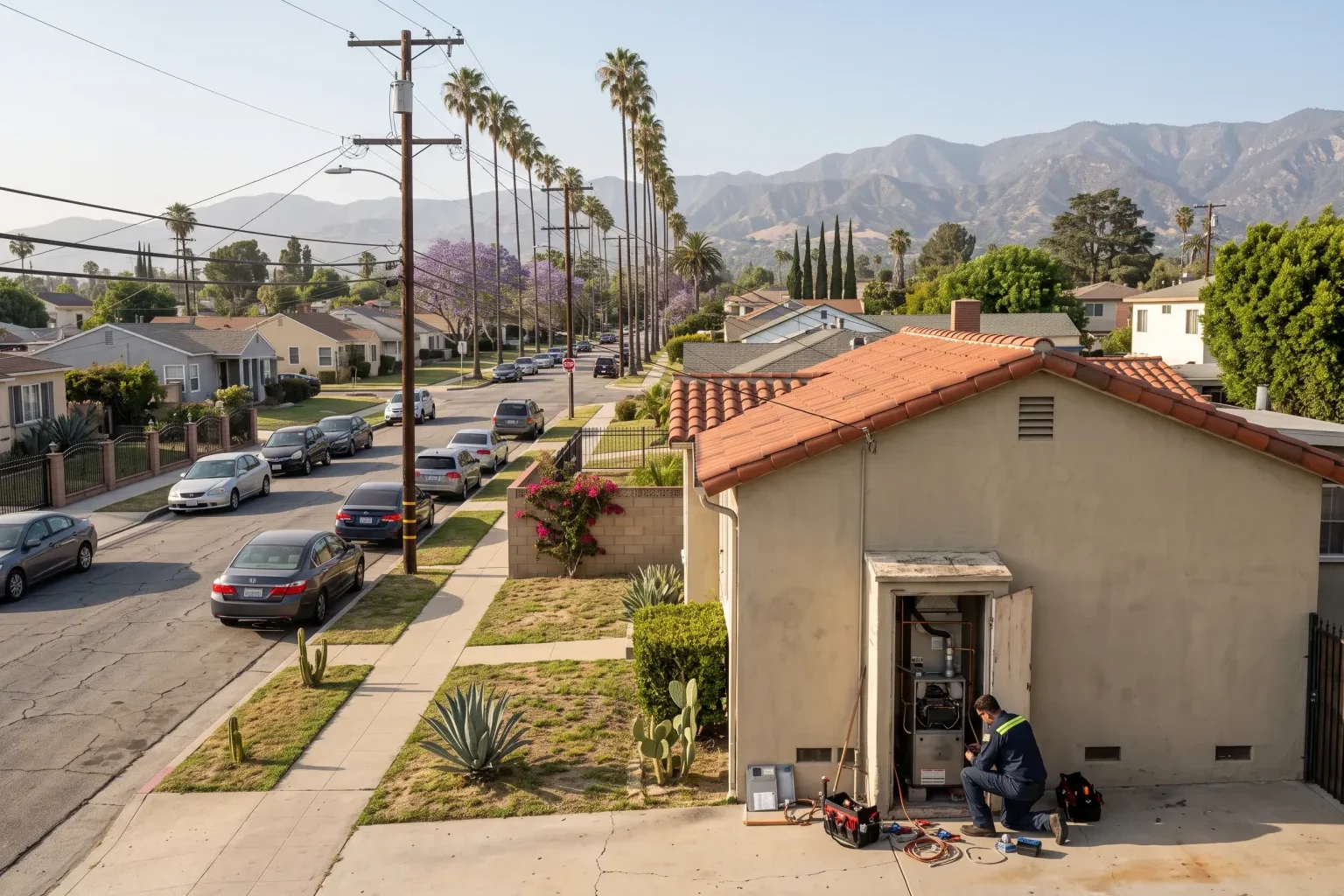
A furnace that refuses to light on a forty-something-degree morning is a small emergency in a house built for warm weather. Valley homes are designed to shed heat, not hold it, so once the burners stop, rooms cool quickly overnight. Climvanta HVAC Repair Service diagnoses and fixes gas furnaces for homeowners in Tarzana and the neighboring communities, whether the unit sits in an attic, a garage, a hallway closet or under the floor. Our approach is simple: find the actual fault, explain it in plain terms, and fix it properly. This page covers the symptoms that bring most people to us, the components we test on a repair call, how we help you weigh a fix against a new unit, the things that affect what a repair costs, and the steps of a typical visit.
Symptoms worth a service call
Because furnaces here run only a few months a year, small problems hide through summer and surface on the first cold night in November or December. Turn the thermostat up for a test run in early fall and pay attention to anything unusual. Call for repair if you notice any of the following:
- The blower runs but the air from the registers stays cool
- The furnace clicks repeatedly, lights briefly and then shuts down
- Nothing happens at all when the thermostat calls for heat
- A rotten-egg smell near the unit, which means you should leave the house and contact the gas utility first
- Squealing, grinding or banging from the cabinet
- The filter clogs unusually fast or dust pours from the vents
- The breaker trips or the unit shuts off before the house warms up
The components we test
Modern furnaces run a strict sequence every time they start: the inducer fan purges the heat exchanger, a pressure switch confirms the vent is clear, the igniter heats up, the gas valve opens, the flame sensor proves ignition, and only then does the main blower start. A failure at any step stops the cycle. Our job is to find which step is breaking down and why.
On a typical diagnostic call we read the control board's fault codes, check the hot surface igniter or spark igniter, clean and measure the flame sensor signal, test the pressure switch and its tubing, verify gas pressure at the valve, inspect the inducer motor and venting for blockages, and examine the blower motor, capacitor and wheel. We also inspect the heat exchanger as far as it can be seen, look for scorch marks or rollout, and confirm that the limit switch is tripping for a real reason rather than a dirty filter.
In attic installations, which are common across Tarzana and the West Valley, we pay special attention to condensate lines, vent connections and duct joints near the furnace, since summer attic heat can dry out seals and loosen connections that only show up in winter.
Making the repair-or-replace call
Most furnace repairs are worth doing. Igniters, flame sensors, pressure switches, capacitors and inducer motors are replaceable parts, and fixing them restores a unit that otherwise has years left. We will not push a new furnace when a reasonable repair solves the problem.
There are cases, though, where we recommend replacement instead. A cracked heat exchanger can allow combustion gases into the airstream, and on most units it is not a practical repair. An older furnace that needs a control board, gas valve and blower motor in close succession may cost more to keep alive than to replace. When that comes up, we lay out both paths with their tradeoffs and let you decide. If you do move toward a new unit, South Coast AQMD Rule 1111 affects which gas furnaces can be sold and installed in the region, and the district has been amending it toward zero-emission requirements, so we check the current rule with you before choosing equipment.
What influences repair cost
Repair pricing depends on what we find, so we explain the diagnosis and the work before any part is replaced. The main factors are:
- Which part has failed and whether it is a universal component or a brand-specific one
- How easy the unit is to reach, with attic and crawlspace installs taking more time
- Whether one fault has caused others, such as a weak inducer damaging a pressure switch
- The age of the furnace and how readily replacement parts can be found
- Related fixes like a new filter rack, a sealed vent joint or a cleared condensate line
The order of a repair visit
When you call, we ask a few quick questions about the symptoms, the furnace location and anything you have already tried, which helps the technician bring likely parts. On arrival, the technician talks with you about what you have noticed, then shuts down power and gas as needed to inspect the unit safely.
After testing, you get a clear explanation of the problem and the recommended fix before work begins. Once the repair is complete, we run the furnace through several full heating cycles, check temperature rise and flame quality, confirm the safety controls respond correctly and make sure the thermostat is calling properly. If we spot anything else that will need attention later, such as a filter that is the wrong size or a duct that has come loose nearby, we point it out so you can plan for it.
Furnace Repair by city
- Furnace Repair in Hidden Hills
- Furnace Repair in Calabasas
- Furnace Repair in San Fernando
- Furnace Repair in Beverly Hills
- Furnace Repair in West Hollywood
- Furnace Repair in Santa Monica
- Furnace Repair in Agoura Hills
- Furnace Repair in Simi Valley
- Furnace Repair in Burbank
- Furnace Repair in Los Angeles
- Furnace Repair in Culver City
- Furnace Repair in Westlake Village