
The short answer
Climvanta HVAC Repair Service inspects and cleans air ducts in Tarzana and nearby cities, removing built-up dust and debris from supply and return runs. We also check for leaks, damage and contamination, and tell you whether cleaning, repair or replacement fits your system.
The ducts in a house are out of sight, so most people only think about them when something smells odd or a vent starts puffing gray dust onto the ceiling. In the Valley, ductwork lives a hard life. It usually runs through attics that turn into ovens by midsummer, it pulls in fine dust during dry months, and in fire season it can carry smoke particles deep into the system. Climvanta HVAC Repair Service cleans duct systems in Tarzana and surrounding communities, but we also look closely at the condition of the ducts themselves, because cleaning a duct that is torn or disconnected does not solve much.
Clues that your ducts need attention
Dust in a home is normal. Dust that returns within a day of cleaning, or that visibly blows out of registers, points to something in the air distribution system. Here are the signs we hear about most often:
- Visible dust or dark streaks around supply registers and ceiling vents
- A musty or stale odor when the blower first kicks on
- Debris, pet hair or construction dust visible just inside the return grille
- Allergy or asthma symptoms that seem worse at home when the system runs
- Recent remodeling, drywall work or flooring sanding without sealed vents
- Evidence of rodents or insects in the attic or near duct runs
- Lingering smoke smell after a nearby wildfire
- Moving into a house where the duct history is unknown
Looking inside before we clean
A duct cleaning visit begins with an inspection. We remove a few registers and the return grille, and where needed we use a camera to see further into trunk lines and branches. That shows us how much debris is present, whether there is moisture staining or microbial growth, and whether pests have been inside.
Then we look at the ducts as a system. In many older Tarzana homes, original metal trunks have been patched over the years with sections of flexible duct. We check for joints that have pulled apart, flex runs that are kinked or flattened, tape that has dried and lost its grip, and insulation that has slipped off or been chewed. A disconnected supply line dumping cool air into the attic, or a return leak pulling hot, dusty attic air into the system, is a frequent cause of both comfort problems and dirt buildup.
We also check the air handler or furnace cabinet, blower wheel and evaporator coil. Debris on the blower or coil restricts airflow and can send dust right back into freshly cleaned ducts, so these parts matter as much as the ductwork.
Clean, repair or replace
Once we know what we are dealing with, the path forward usually falls into one of three categories.
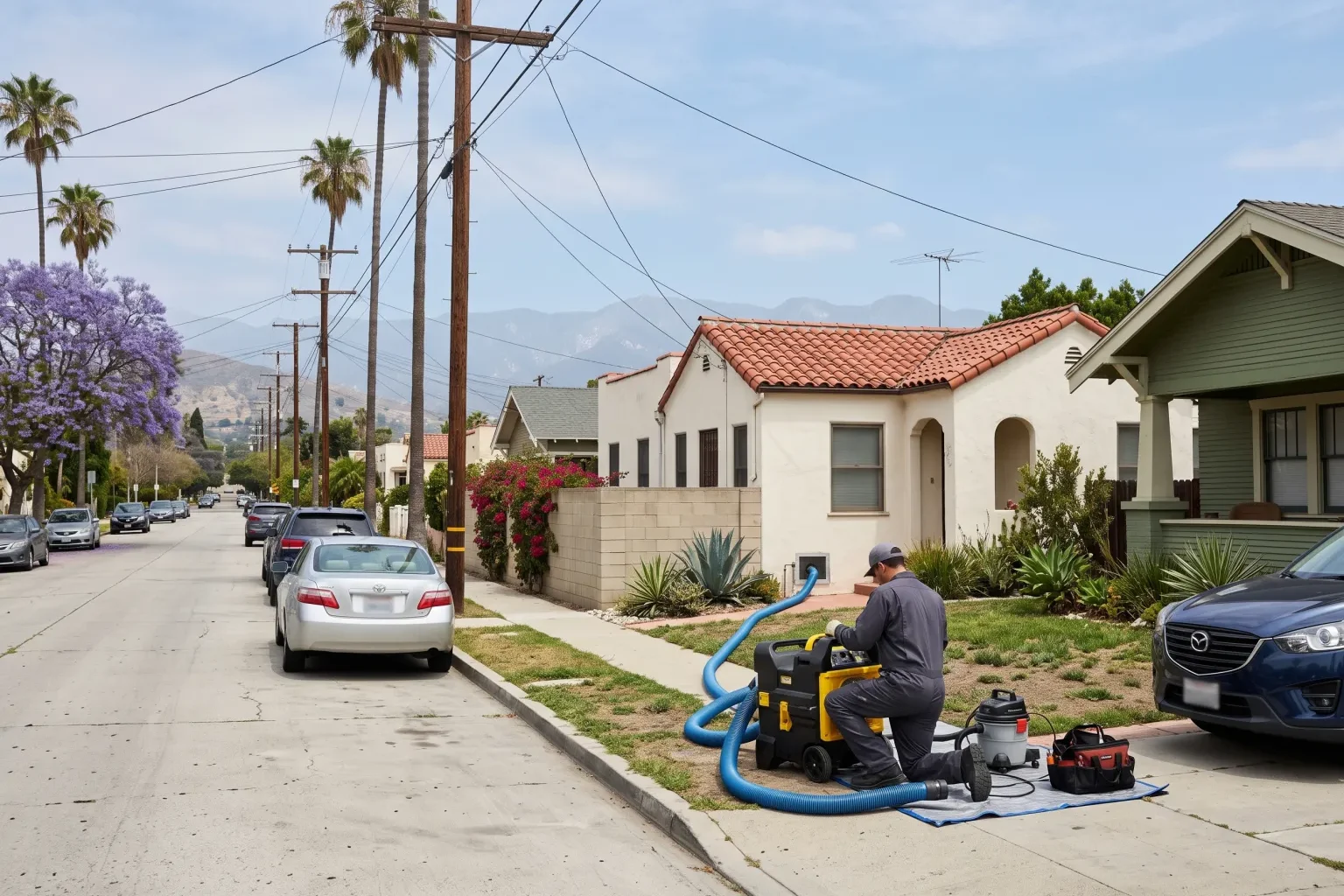
If the ducts are structurally sound but dirty, a thorough cleaning is the right call. We use negative-pressure equipment to keep loosened debris moving toward collection rather than into your rooms, along with brushes and air tools sized for the duct material. Flexible duct requires a gentler approach than rigid metal, and we adjust accordingly.
If the ducts are dirty and have isolated damage, we combine cleaning with targeted repairs: reconnecting separated joints, replacing a crushed section of flex duct, resealing seams and restoring insulation where it is missing.
If the system is old, heavily damaged, badly contaminated or poorly laid out, replacement may be a better use of money than cleaning. That is often the case with brittle flex duct from an earlier era, ductwork with rodent nesting throughout, or runs that were undersized from the start. We explain what we saw and leave the decision to you. Duct replacement is also worth considering alongside a new AC or heat pump, since new equipment performs best when the air it moves actually reaches the rooms.
What affects the scope and price
Duct cleaning jobs vary more than many people expect. The number of supply and return registers is a starting point, but it is far from the whole picture. A single-story ranch house with an easy attic is a very different job from a two-story home with ducts in floor cavities and tight crawl spaces.
The type and amount of debris matters as well. Ordinary household dust cleans out readily. Heavy construction dust, pest debris or smoke residue takes more time and sometimes additional treatment. Any repairs found during inspection add to the scope, as does cleaning the blower and coil if they need it. We give you the full picture before work begins so there are no surprises at the end.
How a duct cleaning appointment runs
We start by asking a few questions: how old the house is, whether there has been recent renovation, what symptoms you have noticed, and whether anyone in the home has allergies or breathing concerns. That shapes what we look for.
During the visit, we lay down floor protection, inspect the system and review what we found with you. If you approve the cleaning, we connect the collection equipment, seal off registers in sequence and clean each branch and trunk line, then the return side. Registers and grilles are cleaned before they go back on. Where repairs were approved, we make them as we go.
At the end we run the system, check airflow at the registers and replace the filter. We also talk about filtration. For homes that deal with wildfire smoke or heavy dust, a better-fitting filter rack or a higher-efficiency filter that your blower can handle can help keep the ducts cleaner for longer.