
The short answer
Seasonal HVAC maintenance in Tarzana means a cooling check before summer and a heating check before winter. We clean, test and measure the key components, report anything worn, and help you plan repairs before a breakdown rather than during one.
Think of HVAC maintenance as a checkup timed to the Valley calendar. Your air conditioner faces its toughest months from June into October, sometimes later when fall Santa Ana winds bring a hot, dry spell. Your heater sees light but important duty for a few weeks of winter. A tune-up before each of those seasons catches worn parts, clears the dirt that steals efficiency and gives you a clear read on how much life the equipment has left. Climvanta HVAC Repair Service performs maintenance on central air conditioners, heat pumps, gas furnaces and ductless systems for homes in Tarzana and the nearby cities. This page outlines the signs that a system is overdue, the checklist our technicians work through, how maintenance findings feed into repair or replacement decisions, what affects the cost of a visit, and how an appointment runs.
Is your system overdue for service?
Equipment that has not been looked at for a while tends to give hints. None of these are emergencies on their own, but together they suggest a tune-up should come sooner rather than later:
- Utility bills creeping up while your habits have stayed the same
- The outdoor unit is covered in leaves, cottonwood fluff or dust
- The system runs longer than it used to on comparable days
- Water around the indoor unit or a drain line that drips slowly
- A musty smell on startup, or more dust settling on furniture
- Nobody remembers when the filter was last changed or the coils were cleaned
The cooling and heating checklist
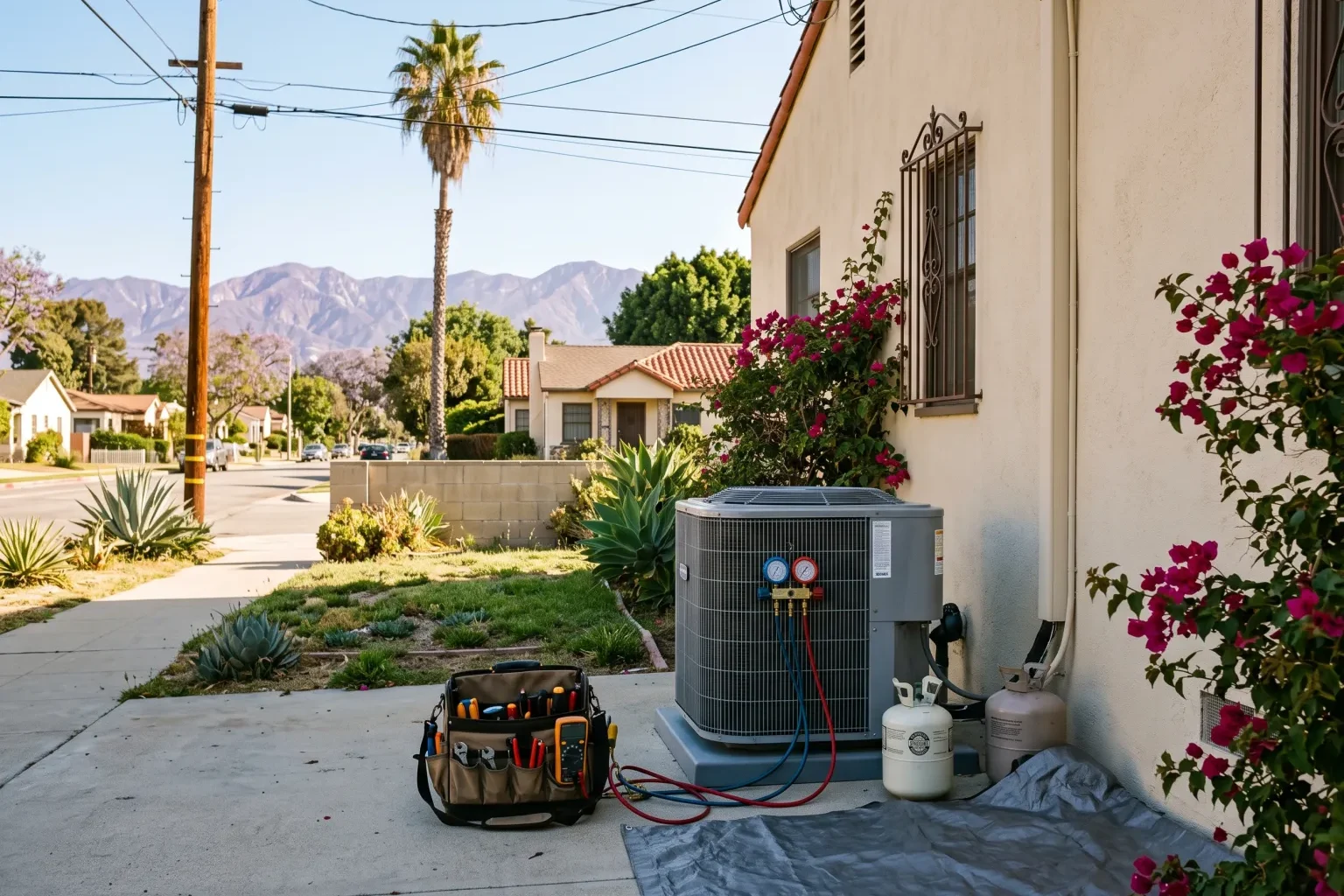
A real maintenance visit goes well beyond swapping a filter. For the cooling side, our technician cleans the outdoor condenser coil, clears debris from around the unit, checks the fan motor and blade, tests capacitors and contactors, measures refrigerant pressures and temperatures, and confirms the indoor evaporator coil and drain pan are clean and draining. Dust and ash from smoke events, along with the fine dust that blows through during Santa Ana conditions, tend to coat outdoor coils here, so that cleaning matters more than it might in a coastal climate.
For the heating side, we inspect burners and clean the flame sensor, check the igniter, verify gas pressure, examine the heat exchanger and vent connection, and test the limit and rollout switches. On heat pumps, we confirm the reversing valve shifts properly and the defrost cycle works. On every system we check blower operation, tighten electrical connections, test the thermostat and measure the temperature difference across the system to make sure it is moving heat the way it should.
In attic installations, we also take a quick look at visible duct connections and insulation near the unit, since separations there are common in older stucco homes and can waste a lot of conditioned air.
What maintenance tells you about repair or replacement
Maintenance is also an information-gathering visit. Readings from capacitors, motors and refrigerant pressures show which parts are drifting toward failure. If a capacitor is weak, we can replace it before it strands you on a hot afternoon. If refrigerant is low, that points to a leak worth locating rather than simply topping off.
When the findings add up to a system near the end of its life, such as a corroded coil, a compressor drawing high current and an older refrigerant type, we tell you so and explain your choices. That gives you time to compare options, including a heat pump, and to check which utility rebates apply. LADWP customers can apply for rebates on qualifying heat pump systems after installation, while many homes outside the City of Los Angeles are served by Southern California Edison, so we confirm the current program for your address before quoting it.
Why the Valley climate shortens the time between tune-ups
Los Angeles has a Mediterranean climate with dry summers and mild winters, but the inland valleys run much hotter in summer than neighborhoods near the coast. That difference shows up directly in how hard equipment works. A condenser in a Tarzana side yard may run most of the afternoon for weeks at a time, while a similar unit a short drive toward the ocean cycles on and off far less.
Long run hours wear on capacitors, contactors and fan motors, and they pull more airborne dust across the outdoor coil. Dry fall winds add another layer of grit, and smoke from fires in the surrounding hills can leave a film on coils and load filters quickly. Attic air handlers face their own strain, since the space around them can be extremely hot through August and September.
None of this means equipment here fails early by default. It does mean a yearly cooling check is worth keeping on the calendar, and homes with heavy use, pets or nearby construction often benefit from a quick filter and coil look between full visits.
What affects the cost of a maintenance visit
Maintenance pricing depends mainly on the scope of the system. These details shape it:
- Number of systems in the home, such as separate upstairs and downstairs units
- Equipment type: split system, heat pump, packaged unit or multi-zone ductless
- Whether both heating and cooling are serviced in one visit or seasonally
- Coil condition, since heavily soiled coils take longer to clean
- Access to the indoor unit, with tight attics adding time
- Filter type and size, especially for media filters
How an appointment runs
We schedule maintenance in spring for cooling and in fall for heating, though a combined visit works for many homes. When the technician arrives, they ask whether you have noticed anything unusual, then begin outdoors with the condenser or heat pump before moving to the indoor unit and thermostat.
The visit ends with a plain-language summary. You will hear what was cleaned and adjusted, which readings looked healthy, and which parts are showing wear. Nothing beyond the agreed maintenance is done without your approval. Between visits, the most useful habit is changing the filter on schedule, more often after wildfire smoke or heavy dust, and keeping plants trimmed back from the outdoor unit.