
The short answer
When a Los Angeles furnace will not light, shuts off after a minute, or blows cold air, the usual culprits are a dirty flame sensor, a failed hot-surface igniter, a tripped pressure switch, a clogged filter or a control board fault. A proper repair also checks venting and the heat exchanger, because a furnace that runs is not automatically a furnace that runs safely.
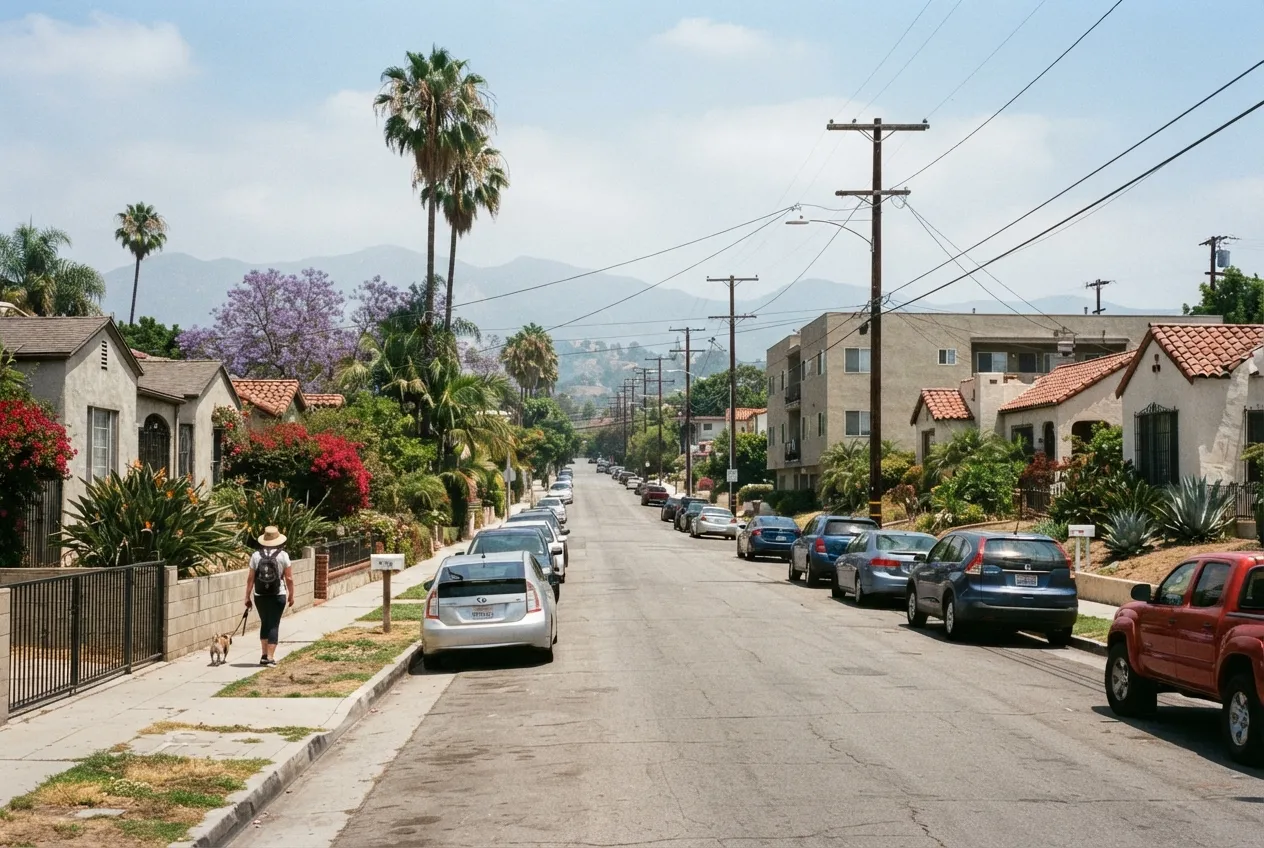
Furnaces in Los Angeles spend most of the year sitting idle, and that long rest is part of the problem. Dust collects on burners, spiders nest in flue openings, flame sensors oxidize, and a blower motor that has not turned since March can struggle on the first chilly night in November. Climvanta HVAC Repair Service handles gas forced-air furnace repair for homes about 14 miles southeast of our Tarzana base, in neighborhoods covering ZIP codes like 90002, 90004, 90010 and 90011. We focus on getting heat back safely, which means checking combustion and venting along with whatever part failed.
Where Los Angeles furnaces tend to live
In central city homes, forced-air furnaces show up in three main places: horizontal units in the attic, upright units in a hallway closet, and occasionally units under the house in a crawlspace. Each location has its own wear pattern. Attic furnaces bake through the summer, which dries out wiring and rubber hoses on the pressure switch. Closet furnaces often have restricted return air because the louvered door was swapped for a solid one. Crawlspace units deal with moisture and rodent damage to wiring.
Knowing these patterns helps us look in the right places quickly, but we still test the whole sequence instead of assuming.
Typical failures and what they mean
Modern gas furnaces follow a set startup routine. The thermostat calls for heat, the inducer fan clears the flue, a pressure switch confirms the draft, the igniter heats, the gas valve opens, and a flame sensor confirms ignition before the main blower comes on. A failure anywhere in that chain stops the furnace and often leaves a blinking code on the control board.
- Burners light and then shut off within seconds: usually a dirty or worn flame sensor
- Inducer runs but nothing lights: pressure switch issue, blocked vent, or cracked igniter
- Furnace runs but air feels lukewarm: restricted filter, overheating limit switch, or gas pressure problem
- Loud bang at ignition: delayed ignition from dirty burners, which needs attention soon
- Blower runs constantly: fan setting on the thermostat or a stuck relay on the board
Safety comes before comfort
A gas furnace that lights is not necessarily safe. On every repair we look at the flue pipe for disconnected joints or corrosion, check that combustion air is not starved by a sealed closet, and inspect what we can of the heat exchanger for cracks or rust-through. If we find a condition that could let combustion gases into the living space, we will explain it clearly and shut off the unit if needed.
If you ever smell gas, leave the home and contact your gas utility from outside. Every home with a gas furnace should also have working carbon monoxide alarms, which are inexpensive and easy to test.
Repair now, or start planning a replacement?
Many repairs are straightforward and extend a furnace's life for several more winters. But if the heat exchanger is cracked or the unit needs repeated major parts, replacement planning becomes worth discussing. In the Los Angeles region, South Coast AQMD Rule 1111 limits NOx emissions from natural-gas fan-type central furnaces sold and installed here, and the district has been amending it toward zero-emission requirements. Anyone considering a new furnace should check the current version of the rule, since the district sets and revises compliance dates.
That shift is one reason many owners also ask about heat pumps, which can heat and cool from one system in the city's mild winters. We can explain both directions without pushing either one.
What to do before we arrive
Check that the thermostat is set to heat and that its batteries are fresh, replace a dirty filter, and make sure the furnace service switch, which often looks like a light switch near the unit, is on. Confirm the front panel is seated firmly, because many furnaces have a safety switch that keeps them off if the door is loose. If the furnace still will not run, note any blinking light pattern on the control board; it saves diagnostic time.
More services in Los Angeles
- AC Repair in Los Angeles
- Heating Repair in Los Angeles
- Heat Pump Installation in Los Angeles
- AC Installation in Los Angeles