
The short answer
A Simi Valley AC installation should be sized with a room-by-room load calculation, matched to ductwork that has been tested, and commissioned on site. Climvanta handles the full job from Tarzana, including the inspection steps the city requires.
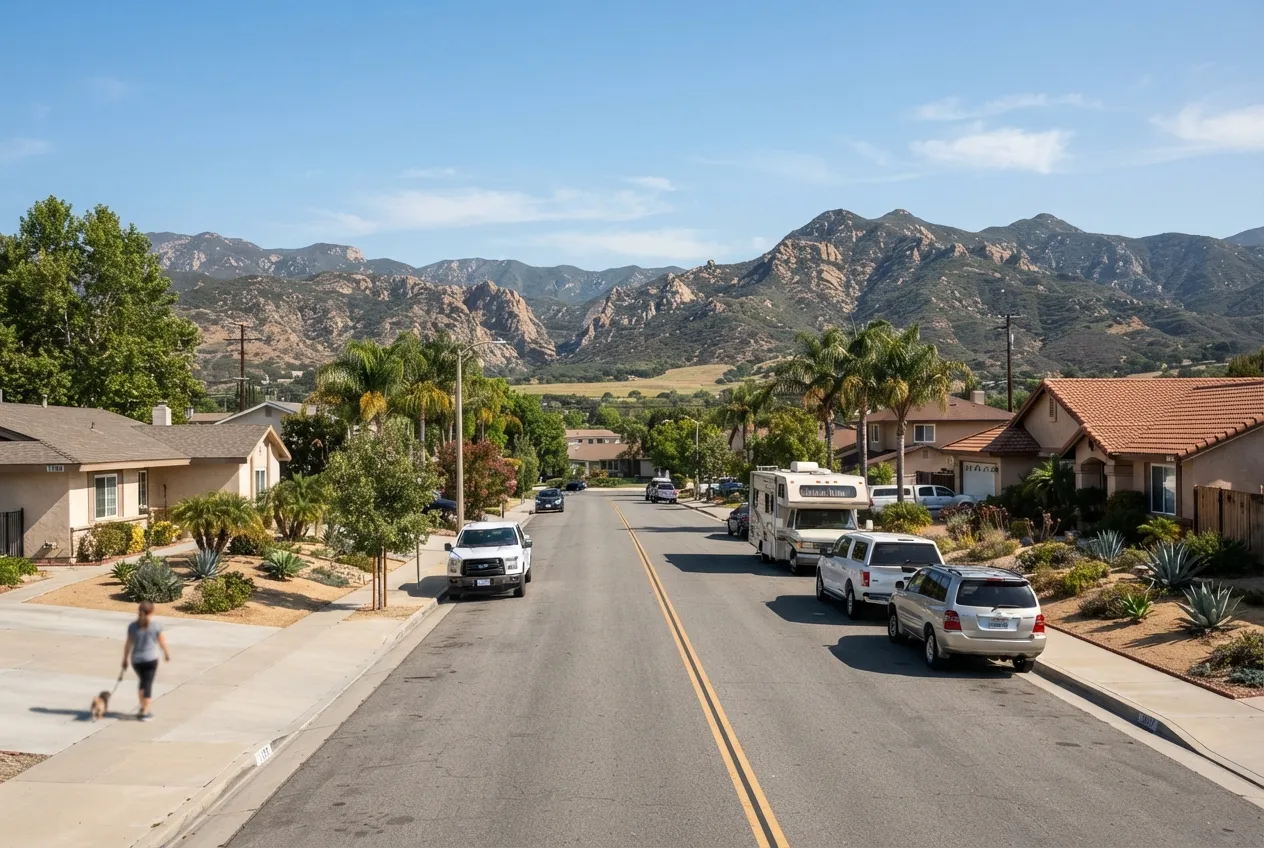
Simi Valley sits in a bowl of hills in Ventura County, roughly 13 miles northwest of our Tarzana shop, and that geography shapes every air conditioner we put in there. Summer heat settles into the valley floor and stays well past sunset, so a new system in ZIP 93063 or 93065 has to carry long afternoon loads without short cycling or freezing up. Our installation work starts with the house, not the catalog: how the rooms face the sun, how much attic insulation is left, what shape the existing ducts are in, and where the outdoor unit can sit so it gets air and stays quiet for the neighbors. From there we size, place and commission a system that fits the home you actually live in.
Why valley heat changes the sizing math
Inland valleys in the Los Angeles region run much hotter in summer than neighborhoods near the coast, and Simi Valley is a clear example. A rule of thumb that works for a beach-area bungalow will undersize a ranch home here, while simply adding capacity creates a different problem: an oversized unit cools the air fast, shuts off, and leaves the house clammy and unevenly cooled.
We run a Manual J style load calculation using your square footage, window area, wall and ceiling insulation, orientation and occupancy. West-facing living rooms and bonus rooms over garages, both common in the tract neighborhoods around the city, often need more airflow than the rest of the house. The calculation tells us what tonnage to install and how to split airflow between rooms.
What we check before choosing equipment
Many Simi Valley homes were built with ducts running through hot attics. Decades of summer heat dry out the tape and crush the flex runs, so a new condenser connected to leaky ducts can lose a meaningful share of its cooling before the air reaches a register. Before we quote equipment, we look at the duct system and tell you plainly whether it can be reused, sealed, or should be replaced.
- Static pressure readings to see whether the ducts can move the airflow a new system needs
- Visual inspection of attic runs, plenums and boots for gaps, kinks and disconnected sections
- Electrical panel capacity and breaker sizing for the outdoor unit
- Condensate drain routing, including whether a secondary pan or float switch is needed in the attic
- Pad location, clearance from walls and fences, and sound exposure toward bedrooms next door
Choosing between a straight AC and a heat pump
Winters in Simi Valley are mild but cool at night, so a lot of owners ask whether to replace an old split AC with another AC paired to a gas furnace, or move to a heat pump that handles both jobs. We lay out both paths. A conventional AC keeps your existing furnace in service; a heat pump can retire it. Rebate options depend on which utility serves your address, and many homes outside the City of Los Angeles are served by Southern California Edison rather than LADWP, so we confirm the current offer for your property before we put it in a quote.
If you are also planning to replace a gas furnace, keep in mind that South Coast AQMD Rule 1111 limits NOx emissions from natural-gas fan-type central furnaces, and the district has been amending the rule toward zero-emission requirements. We will point you to the current version so the plan you choose today still makes sense later.
Installation day, step by step
A typical replacement is one to two days of work depending on duct changes. We protect floors and the path through the garage or hallway, recover refrigerant from the old system, and remove the old condenser and coil. The new coil is set on the furnace or air handler, refrigerant lines are cleaned or replaced, and the line set is brazed with nitrogen flowing to keep scale out of the system.
After a deep vacuum and a standing pressure test, we release the refrigerant charge and fine tune it using superheat or subcooling readings rather than guesswork. Thermostat wiring is checked, and if you are adding a smart thermostat we configure staging and fan settings to suit a valley house that heats up quickly in the afternoon.
Permits, inspection and handoff
Replacing a central air conditioner in Simi Valley requires a mechanical permit, and the inspector will look at disconnects, line set insulation, clearances and the condensate setup. We pull the permit, schedule the inspection, and meet the inspector so you do not have to take a day off. Before we leave the job, we walk you through filter location and size, how to read the thermostat, and what to watch for in the first weeks of operation.
Smoke from regional wildfires is another reason owners upgrade at installation time. If your return can accept a deeper media filter cabinet, we can add one so the system catches more fine particles when the air outside turns hazy.
More services in Simi Valley
- AC Repair in Simi Valley
- Heating Repair in Simi Valley
- Heat Pump Installation in Simi Valley
- Furnace Repair in Simi Valley