
The short answer
A Burbank AC installation has to handle long, hot Valley summers, so sizing and duct condition matter more than the brand. We calculate the load, repair or replace weak ducts in compact attics, verify electrical capacity and commission the system before we leave.
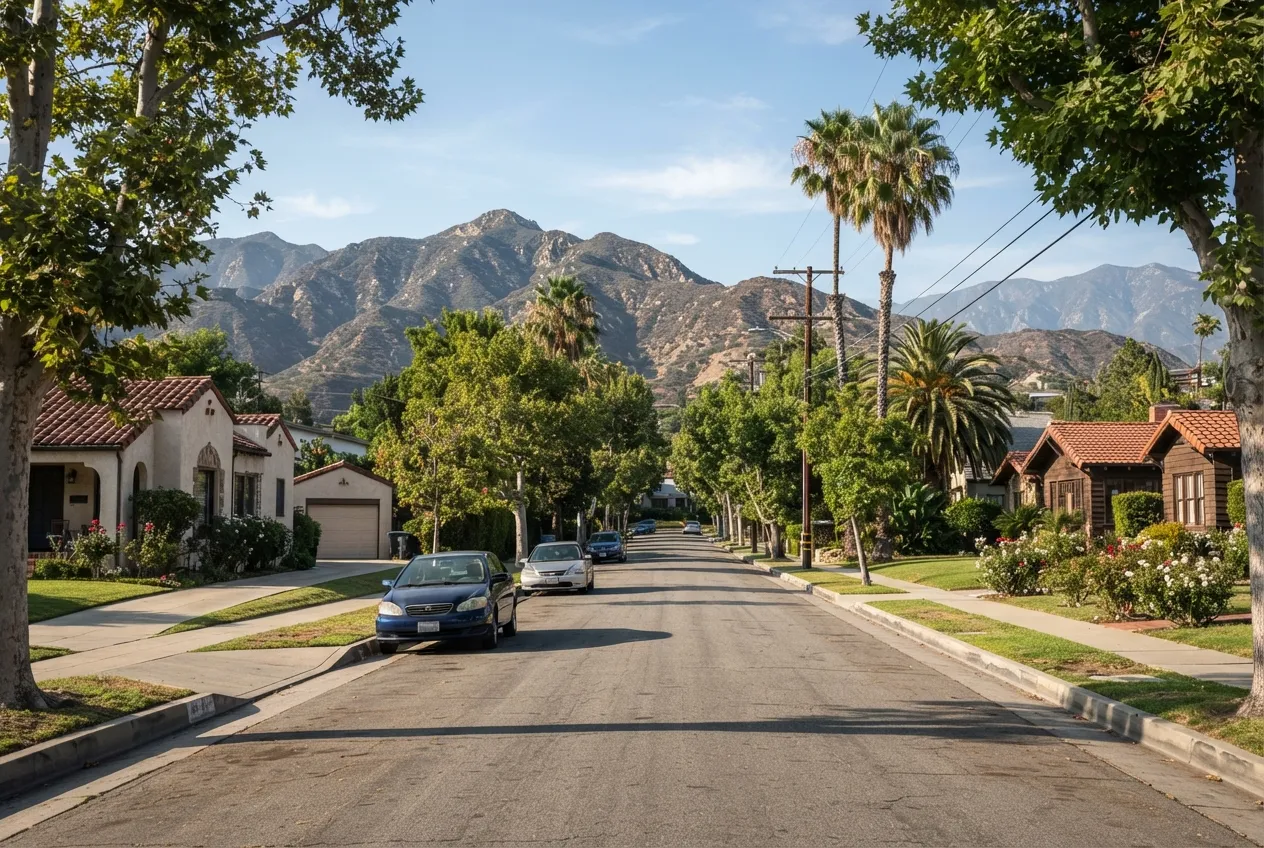
Burbank sits at the eastern end of the San Fernando Valley, about 13 miles east of our Tarzana base, and it shares the Valley's hot, dry summers. For homeowners in ZIP codes 91501, 91502, 91504, 91505 and 91506, a new air conditioner is less a luxury than a piece of equipment that will run hard for months every year. Much of the city's housing stock consists of older single-story homes with low-pitched roofs, compact attics and ductwork that has been patched over decades, along with a growing number of condos and townhomes. Climvanta installs central split systems, heat pumps and ductless mini-splits for these homes, with an emphasis on the details that decide how well a system performs through a Valley August: sizing, duct condition, airflow and electrical capacity. The sections below explain our installation process from first visit to final walkthrough.
Valley heat sets the bar
Inland neighborhoods and valleys in Los Angeles run much hotter in summer than areas near the coast, and Burbank is firmly on the inland side. A cooling system here may spend weeks running through the late afternoon. That workload makes the choice of capacity and efficiency more consequential than it would be in a beach town.
We size equipment with a room-by-room load calculation that accounts for roof color and insulation, window area and orientation, shade, ceiling heights and occupancy. In many older Burbank houses, the existing unit was chosen decades ago by rule of thumb, and insulation or windows have changed since. Matching the old tonnage can leave you with a system that is too large and cycles constantly, or too small and never catches up. Variable-speed and two-stage equipment can be a strong fit, since it runs longer at lower output and removes heat more evenly.
Compact attics and tired ducts
Low-slope roofs common on older single-story homes create shallow attics that get extremely hot in summer. Ducts running through that space lose cooling quickly if they leak or lack insulation, and a new high-efficiency unit cannot overcome a duct system that dumps conditioned air into the attic.
During the site visit, our technician goes into the attic and documents what is there.
- Flexible duct that has sagged, kinked or been crushed during other work.
- Joints and boots that have separated or were never sealed with mastic.
- Insulation levels on ducts compared with current expectations for hot attics.
- Old metal ducts that may contain deteriorating wrap and should be evaluated before disturbance.
- Supply and return sizes compared with the airflow the new equipment needs.
- Registers placed where they blow onto furniture or into corners rather than across rooms.
Equipment choices for Burbank homes
Most single-family homes with workable ducts get a split system: an outdoor condenser or heat pump paired with an indoor coil and furnace or air handler. If the gas furnace is due for replacement too, a heat pump that both cools and heats deserves a look. South Coast AQMD Rule 1111 limits NOx emissions from natural-gas central furnaces sold and installed in the region and has been amended toward zero-emission requirements, and we review the current rule with you instead of guessing at dates.
Condos and townhomes, and houses with additions or garage conversions, often suit ductless mini-splits. They avoid new ductwork entirely and let each room run at its own temperature, which helps when a converted back room bakes in the afternoon sun.
Rebates depend on which utility serves your address, and that varies across Los Angeles County. We confirm the current offer for your specific account before including it in a proposal. The federal 25C credit applied only to qualifying heat pumps placed in service before December 31, 2025, and does not apply now.
Installation and commissioning
A typical replacement takes about a day, longer when ducts are replaced or the electrical panel needs work. We set the outdoor unit on a level pad with clearance for airflow, install a new line set when the old one is the wrong size or condition, braze and nitrogen pressure test the connections, and evacuate the system to a deep vacuum before charging.
Commissioning is where many installations fall short. We measure static pressure, airflow, temperature split and refrigerant charge, set up the thermostat, and walk you through filter changes. During wildfire smoke events, a deeper media filter helps, and we size the filter cabinet so it does not choke the blower.
Also serving nearby cities
From Burbank, our installation crews also work in San Fernando, Los Angeles, West Hollywood, Beverly Hills and Culver City. Whatever the neighborhood, ask to see the load calculation behind any recommended system size; it is the best way to compare proposals fairly.
More services in Burbank
- AC Repair in Burbank
- Heating Repair in Burbank
- Heat Pump Installation in Burbank
- Furnace Repair in Burbank