
The short answer
Larger Hidden Hills homes often need multiple systems or zoning rather than one big unit. We run a room-by-room load calculation, inspect every air handler and duct system, and plan equipment placement and access before installing, with rebates confirmed for your utility.
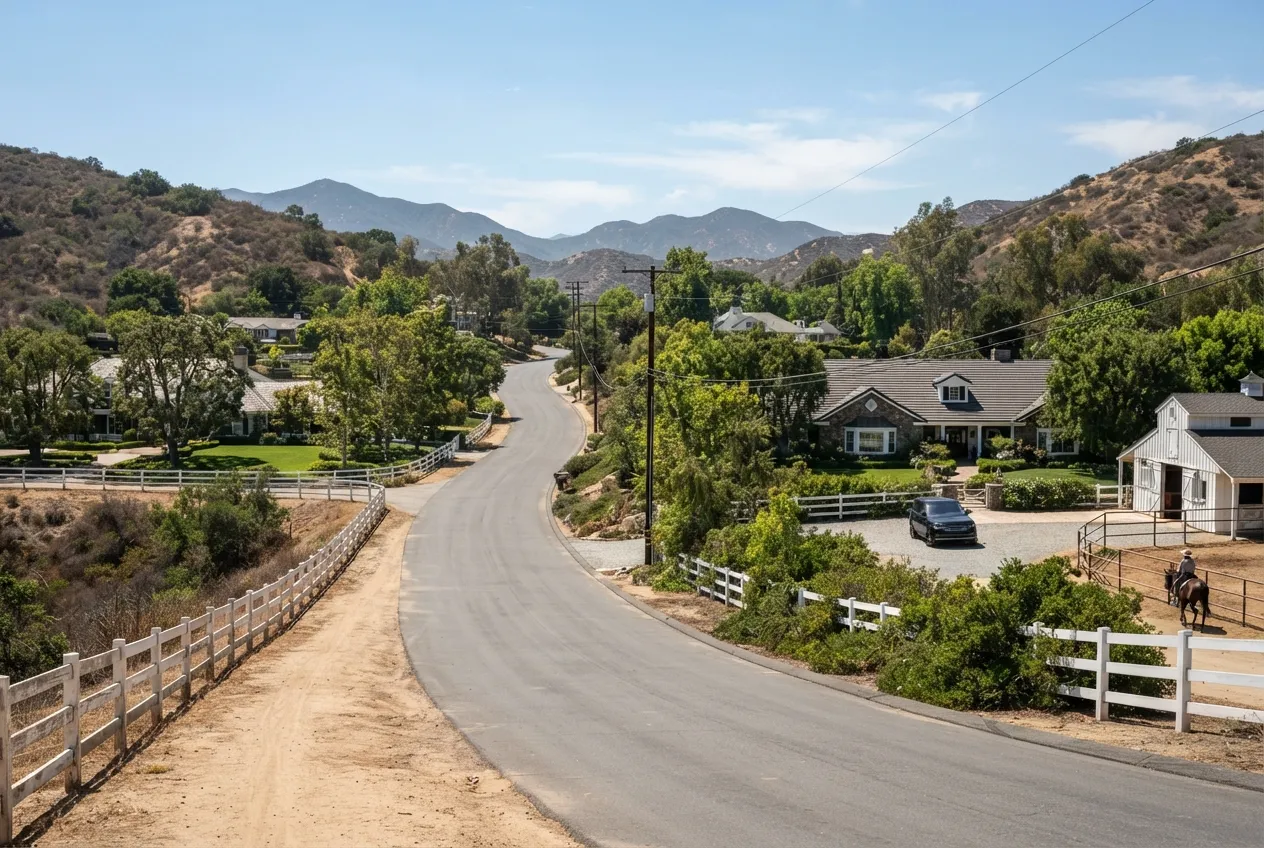
Hidden Hills is about six miles due west of our Tarzana office, close enough that we know the summer pattern well: long, dry, hot afternoons at the western edge of the San Fernando Valley, with Santa Ana winds in fall that can keep the heat going well past the usual season. Homes here are often larger than average and spread across one or two wings, so an air conditioning replacement is rarely a matter of dropping in one box. Many properties run two or more systems, each serving its own part of the house. This page explains how we plan a new cooling installation for a Hidden Hills home, from capacity and zoning to equipment placement and getting through the gate on installation day.
One big system or several smaller ones
A sprawling floor plan with a main living area, a bedroom wing and perhaps a guest suite usually cools better with separate systems than with a single oversized unit. Each system can match the heat load and schedule of the rooms it serves. A west-facing family room that bakes in the afternoon does not have to drag the bedrooms along with it.
When separate systems are not practical, zoning offers another route. Motorized dampers and a zone control board let one variable-speed system send air where it is needed. We compare both approaches for your layout, looking at existing duct paths, attic access and how each area of the home is used day to day.
Sizing starts with the house, not the old nameplate
Old equipment was often sized by rule of thumb, and remodels may have added rooms or glass since then. We measure every conditioned space and account for window area and orientation, ceiling height, insulation and roof exposure. The resulting load calculation tells us how much capacity each zone or system really needs.
Correct sizing matters more in a dry inland climate than many people expect. An oversized unit cools the air quickly, satisfies the thermostat and shuts off, leaving rooms that feel clammy and temperatures that swing. Right-sized, variable-speed equipment runs longer at lower output and keeps the house steadier.
What we check across the property
Bigger homes mean more places for problems to hide. Before we finalize a proposal, we go through each part of the existing installation.
- Every air handler or furnace location, including attics, closets and garages
- Duct condition and sizing on each system, with static pressure readings
- Electrical panels and sub-panels feeding each outdoor unit
- Line set length and routing between indoor and outdoor equipment
- Condensate drains, pans and float switches on attic units
- Outdoor pad locations, landscaping clearance and sound toward outdoor living areas
- Thermostat locations and whether a single app or control can manage all zones
Heat pumps and rebates for Hidden Hills addresses
Many owners use a replacement as the moment to switch to heat pumps, which cool in summer and heat in the mild winters this area sees. Pairing a heat pump with an existing gas furnace is also an option if you want gas backup on the coldest nights.
Hidden Hills lies outside the City of Los Angeles, and many homes outside the city get their electricity from Southern California Edison rather than LADWP. That means rebate programs depend on your utility, and we confirm the current offer for your address before quoting anything. The federal 25C credit covered heat pumps placed in service before December 31, 2025, so it does not apply to new installs.
Air quality during fire season
Dry hillsides surround this part of the region, and wildfire smoke can settle in for days during a bad season. A new installation is a good time to upgrade filtration. We can add media filter cabinets on returns so each system runs a higher-efficiency filter without restricting airflow beyond what the blower can handle.
Outdoor units also collect ash during smoke events. We position condensers with enough clearance for easy coil rinsing and show you how to clean them gently once the air clears.
Scheduling, access and installation day
We coordinate arrival times and any gate or property-manager requirements in advance so the crew can start on time. A single-system replacement typically takes one to two days. Multi-system projects are often staged, so part of the house stays cool while another system is being replaced.
Each new system gets a cleaned or new line set brazed under nitrogen, a pressure test, a deep vacuum and a measured refrigerant charge. We verify airflow and temperature split on every zone, set up the thermostats and walk you through operation. Old equipment is removed and recycled.
More services in Hidden Hills
- AC Repair in Hidden Hills
- Heating Repair in Hidden Hills
- Heat Pump Installation in Hidden Hills
- Furnace Repair in Hidden Hills